Emergency Plumbing · Grand Island, NE
Sewer Line Repair & Replacement in Grand Island, NE
Emergency Plumber Grand Island starts every sewer line repair call for Hall County homes and businesses the same way — with a camera, not a shovel. We handle sewer line camera inspection, trenchless pipe bursting, CIPP pipe lining, tree root intrusion removal, and full open-trench replacement, walking every yard from the first push of the camera through the final backfill inspection.
A failing sewer lateral is worth understanding before a crew breaks ground, because a wrong guess means digging up the wrong twenty feet of yard. We offer a camera-based consultation that shows exactly where a line has bellied, cracked, or filled with roots, then size the repair — trenchless or open-trench — to what the camera finds. Pre-1950 homes near downtown Grand Island still run original cast iron drain lines and galvanized supply piping, and those older laterals are where most root intrusion turns up.
Trenchless repairs typically wrap in a single day, and even a full open-trench replacement usually runs one to two days end to end unless depth or access complicates the dig. Every job gets a written price before a single shovel goes in the ground, backed by a workmanship warranty that survives the backfill.
When Grand Island homeowners choose us for sewer line repair, they're choosing a crew that treats the yard like it still belongs to them once the truck leaves — precise excavation, sod put back where it came from, and a lateral built to outlast the one it replaced for decades to come.
What We Do
Our Sewer Line Repair Services
Every sewer call starts with a look, not a guess, and the repair method follows exactly what the camera shows — root-choked joints, a bellied section, or a full material failure. Trenchless or open-trench, every job holds to the same permit, safety, and inspection standard.
Sewer Line Camera Inspection
Before we recommend anything, a technician runs a sewer line camera inspection down the line and records exactly what's happening underground — a root mass at a joint, a bellied section holding standing water, a collapsed run of old Orangeburg pipe, or a straightforward clog. The full inspection usually takes 30 to 60 minutes and gives us a location, a depth, and a cause before anyone touches a shovel.
That footage becomes the basis for your quote, not a guess based on the age of the house. If the line just needs clearing, we say so; if it needs replacing, you see the exact section on video before approving the work.
Trenchless Repair — Pipe Bursting & CIPP Lining
For lines that need more than clearing, trenchless pipe bursting pulls a new HDPE pipe through the old one, cracking the failing cast iron or clay outward as it goes, while CIPP (cured-in-place pipe) lining cures a resin liner inside the existing pipe to seal cracks and root-damaged joints. Both methods work through two small access pits instead of a trench the full length of your yard.
Trenchless work runs $4,000 and up depending on length and depth, and most jobs finish inspection-ready within a single day — the first option we price on root-damaged or bellied laterals.
Traditional Open-Trench Replacement
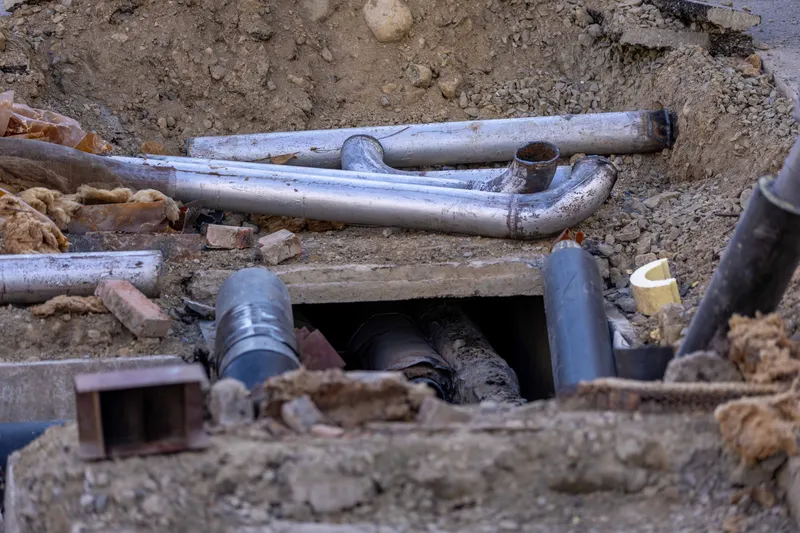
Not every line qualifies for trenchless repair — a severely collapsed run, multiple bad bellies, or a lateral that needs rerouting entirely still calls for open-trench replacement with new PVC Schedule 40 pipe set to proper grade. We excavate to the depth the camera and a pre-dig utility locate confirm, replace the full damaged run, and pressure- and camera-test the new line before backfilling.
Open-trench jobs typically run two to five days depending on length and depth, and every dig is permitted through the City of Grand Island's Building Services Division under City Code Chapter 26 before work begins.
The Benefits
Sewer Line Repair Benefits
A repaired lateral isn't just about avoiding a backup — it protects the yard you already have, the value of the house, and what's actually growing in the soil once the job's done.
Minimal Yard Disruption
Trenchless methods need only two small access pits instead of a trench running the length of your yard, so mature trees, sprinkler lines, and a fresh driveway generally stay untouched. For a corner lot or a lateral running under a patio, that difference alone often decides which method makes sense.
Sod goes back where it came from instead of over forty feet of open trench, and the lawn is usually walkable again within days rather than weeks.
Long-Term Reliability
New HDPE and CIPP-lined pipe doesn't corrode, doesn't scale, and won't let tree roots back in at a joint the way older cast iron and clay sections do. That matters more here than in newer subdivisions — Grand Island's pre-1950 housing stock still runs a meaningful share of original cast-iron drain lines nearing the end of a normal service life.
A properly sized, professionally installed replacement is built to outlast the section it replaces by decades, not years.
Protects Your Home's Value & Health
A sewage backup isn't just an inconvenience — standing wastewater in a basement is a health hazard, and per the Insurance Information Institute, water damage and freezing claims average $15,400 and account for 22.6% of all homeowners insurance claims nationally.
Fixing a failing lateral before it fails completely protects your household's health and the resale value of a home with no documented sewage event on record.
Why Us
Why Choose Us for Sewer Line Repair
Sewer work rewards a camera-first look at what's under Hall County's older neighborhoods, not a guess based on the age of the house.
Local Plumbers, Fixed Prices
Every diagnosis and every invoiced job is with work held to Uniform Plumbing Code and International Plumbing Code standard. Ask to see coverage before a truck is dispatched — a legitimate local company hands it over without hesitation.
We Know Hall County's Pipe History
Grand Island, Doniphan, and Cairo all carry older laterals in original cast-iron and galvanized construction, and some older neighborhoods still run Orangeburg pipe from their mid-century build-out. Reading that history off the camera shapes the repair we recommend, not a one-size answer pulled from a franchise script.
Fixed, Written Pricing
The price we quote after the camera inspection is the price on the invoice — trenchless or open-trench, no change order once the crew is on-site unless the ground itself changes the scope. You approve the number, and the method, before any excavation starts.
Not sure whether you're dealing with wastewater backing up or groundwater getting in? This page covers the first — a buried lateral carrying waste out of the house. If it's the second, water rising through a floor drain or along a foundation wall after rain, that's a different system; see our sump pump installation and repair coverage instead.
Camera work on an older lateral sometimes turns up buildup further down the line rather than a structural problem, which is where a drain cleaning visit comes in first. If you're unsure whether water in a crawlspace is coming from the sewer line or a hidden supply leak, our leak detection team can rule that out. However you got here, Emergency Plumber Grand Island answers every call between 2 AM and 11 PM, and sewer inspections route through the same emergency plumbing dispatch line that handles burst pipes and no-heat emergencies.
Service Area
Serving Grand Island & Surrounding Areas
Frequently Asked Questions
How much does sewer line repair cost in Grand Island?
Camera-verified trenchless repair in Grand Island typically starts around 4,000 dollars and can run 15,000 dollars or more for a longer run, while a standalone camera inspection alone runs 150 to 500 dollars. Open-trench replacement can cost less per foot on a short, easy-access run, but rock, roots, or a nearby utility line change the final number. We never quote a sewer job without running the camera first, so the price reflects what your line actually needs. Every quote is written and fixed before excavation starts.
What are the signs I need sewer line repair, not just a drain cleaning?
A single slow drain is usually a fixture-level clog, but multiple drains backing up at once — a toilet gurgling when the washing machine drains, or the lowest drain in the house backing up first — points to the main line itself, not one fixture. Gurgling sounds, sewage odor in the yard, an unusually green or soggy patch of lawn over the lateral's path, and repeated clogs in the same spot within weeks of a cleaning are the other tells. If more than one fixture is affected at the same time, it's a main-line problem, and a camera inspection is the right next call rather than another round of snaking.
What's the difference between trenchless and traditional sewer line replacement?
Trenchless methods — pipe bursting and CIPP lining — replace or reline a failing sewer lateral through two small access pits instead of a trench dug the full length of the run, which is why they typically finish within a single day. Open-trench replacement excavates the entire path of the pipe, often two to five days, but is sometimes the only option when a line needs rerouting or has multiple severe bellies. Both methods get pressure- and camera-tested before backfilling. Which one applies to your line comes down to what the camera inspection shows, not a blanket preference.
Do you always run a camera inspection before recommending a repair?
Yes — every sewer line call starts with a camera run down the line, typically a 30 to 60 minute process, before we recommend trenchless repair, open-trench replacement, or just a cleaning. That footage shows the exact depth and location of a belly, a root mass, or a collapsed section, and becomes the basis for a fixed written quote rather than a guess based on the house's age. Skipping straight to a recommendation without seeing the pipe is how homeowners end up paying to dig up the wrong section of yard. You see the video before approving any work.
What causes tree root intrusion in a sewer line?
Roots don't puncture solid pipe — they find their way in through an existing joint, hairline crack, or a section of aging cast iron or clay pipe already starting to fail, drawn in by the moisture inside the line. Older Grand Island neighborhoods with mature trees planted decades ago near original laterals see this constantly, especially where cast-iron drain lines from pre-1950 construction have started to corrode at their joints. Once roots get a foothold, they thicken every year and eventually choke or crack the line. Trenchless lining or bursting removes the root path entirely rather than just cutting back what's grown in.
Do I need a permit for sewer line repair in Grand Island?
Yes — inside Grand Island city limits, sewer line repair requires a permit through the city's Building Services Division under City Code Chapter 26, and an inspection signs off before backfilling is considered complete. Smaller Hall County villages like Alda, Doniphan, and Cairo handle plumbing permits at the village-board level instead, while acreages outside any village's corporate limits fall under the county's building office. We pull whichever permit applies to your address and schedule the inspection as part of the job.
Where does my responsibility end and the city's sewer system begin?
In most municipal systems, including Grand Island's, the homeowner owns and maintains the lateral running from the house to the connection point at the city main, while the city is responsible for the main line under the street. That ownership line is why a clog or break inside your yard is your repair bill, but a backup caused by a problem in the city main isn't. The distinction gets more locally specific outside city limits — in Hall County's smaller villages, the water and sewer utility and permitting authority runs through the village board rather than a city department. We confirm which system your home connects to before diagnosing where a blockage sits.
Will trenchless repair work on old clay or Orangeburg pipe?
In most cases, yes — trenchless pipe bursting suits failing older materials like clay and Orangeburg bituminous fiber pipe well, since the bursting head cracks the old pipe outward as the new HDPE line is pulled through, and CIPP lining seals cracked joints from the inside without removing the original material. Orangeburg pipe, common in mid-century construction across many older Nebraska neighborhoods, has often gone oval or partially collapsed by now, which the camera inspection confirms before we commit to a method. The one exception is a line collapsed so completely there's no clear path to pull a new pipe through — that calls for open-trench replacement instead.
How long does sewer line replacement take, and will my yard get torn up?
Trenchless repair usually wraps within a single day and needs only two access pits, a few feet across, rather than a trench the full length of the lateral — most lawns, sprinkler lines, and driveways come through untouched. Open-trench replacement runs closer to two to five days depending on the length and depth of the dig, and does mean an open trench across whatever the lateral's path crosses until backfill is complete. We fill and re-sod trench work as part of the job, and either way, we tell you which scenario applies before work starts.
Multiple drains backing up at once — is that a sewer line problem?
Almost always, yes. A single clogged fixture is a local blockage, but when the toilet gurgles as the washer drains, or the lowest drain in the house — usually a basement floor drain or shower — backs up before anything else, that's the signature of a blocked main line, not one bad trap. Sewage backing up into a tub or floor drain is a health hazard as well as a plumbing one, and it's worth shutting off water use until a camera inspection locates the blockage. This is a different failure mode from a sump pump letting groundwater in through the floor — one is wastewater trying to get out, the other is water trying to get in.
Get a Free Sewer Line Camera Inspection
See what's actually happening underground before you approve a repair. Call (716) 442-8748, 2 AM to 11 PM daily.
(716) 442-8748